Why Does Your tk999 Setup Feel Different on Another Phone?
You have been using tk999 for a while. You know exactly where the login button sits, how the app behaves when your connection dips, and which payment method clears fastest on a Friday night. Then a friend hands you their phone, you open the same platform, and nothing feels right. The menus are in a different order. The app asks for permissions it never asked you for. The balance updates lag by a second or two. It is the same account, the same platform, the same person, yet the experience is noticeably different. That gap is what this article is about. I am writing from my own routine, not from a feature list, because the differences I ran into were not something a help page ever explained to me.
How my routine on tk999 actually looks
My day starts early, usually before the traffic noise picks up. I open the app on the same mid-range Android phone I have used for two years. I check my balance, look at whatever is live, and decide whether anything is worth my attention. Most mornings it is not, and I close the app within a few minutes. That short, boring routine is the whole point. A betting platform only becomes useful when it stops being exciting and starts being predictable.
What made tk999 predictable for me was repetition. Same phone, same network, same login pattern. I learned that the app opens faster if I do not force-close it overnight. I learned that my bank transfer clears in a window that is fairly consistent on weekday mornings. I learned which notifications I actually want and which ones just interrupt me. None of that is in any official description. It came from doing the same small things hundreds of times.
That is also why the first time I tried my account on a different device, the difference was so obvious. My routine was built around one specific setup. The platform did not change. My environment did.
The day I logged in from someone else’s phone
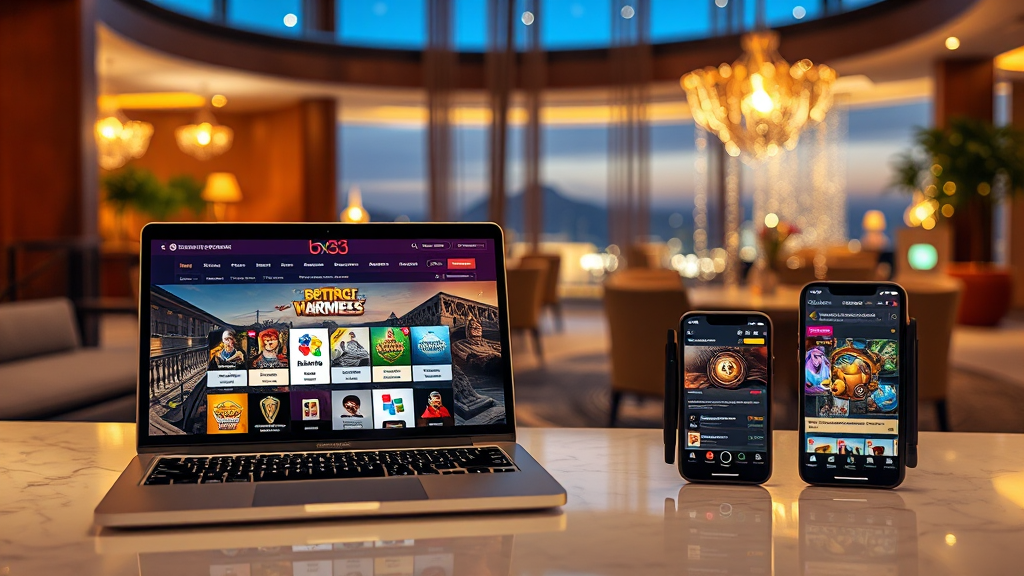
It happened on a Saturday afternoon. My phone was charging in another room, and a friend asked me to check something on the platform while we were sitting together. I logged in on his phone, a newer model with a different Android version and a different screen size. The account loaded fine. The balance was correct. Nothing was broken. And yet the whole thing felt like a different product.
The first difference was layout. On my phone, the main navigation sits in a place my thumb reaches without thinking. On his, the same elements were rearranged to fit a taller screen. Nothing was missing, but my muscle memory was useless. I kept tapping the wrong area and opening screens I did not want.
The second difference was speed perception. His phone is faster than mine, but the app felt slower because it was doing more in the background. More animations, more visual transitions, a heavier interface. On my older device, the app had quietly simplified itself. I had never noticed that simplification until I saw the full version.
The third difference was the one that actually mattered. When I went to deposit, the payment options were ordered differently. The method I use every week was not the first one listed. I had to stop and read the screen instead of moving on autopilot. That small pause made me realize how much of my routine depended on the interface, not on the platform itself.
What actually changes between one device and another
After that afternoon, I started paying attention. Here is what I found changes most often when you move the same tk999 account to a different phone.
Screen size and layout. The platform adapts its interface to the screen it is given. A larger screen shows more at once, which sounds better but can scatter the elements you use most. A smaller screen compresses things, which can hide options behind extra taps. Neither is wrong. They are just different, and your hands know the difference even when your eyes do not.
Operating system version. Android and iOS handle background processes, notifications, and permissions differently, and they change those rules with every major update. An older phone may restrict something the app wants to do. A newer phone may ask for permissions your old one granted silently years ago. That is why the same app can feel lighter on one device and heavier on another.
Network conditions. This one is easy to underestimate. My home Wi-Fi is stable. My friend’s phone was on mobile data in a crowded area. The platform was identical, but the connection was not, and the app’s behavior reflected that. Balance refreshes took longer. Screens loaded in a different order. If you have ever blamed a platform for something your network did, you are not alone.
Saved settings and cache. Your phone remembers a lot about how you use an app. Login state, notification preferences, and cached data all live locally. Move to a new device and you start from a cleaner slate, which means the app behaves more generically until it learns your patterns again.
Installed app versus browser. Some people use the downloadable app, others open the site in a browser. These are genuinely different experiences. The app can hold your session and send notifications. The browser is lighter and easier to clear. Neither is universally better, but switching between them mid-routine will feel jarring.
Why I stopped assuming my setup was the standard
For a long time, I assumed my experience was the normal one. If something worked smoothly for me, it should work smoothly for everyone. That assumption was wrong, and it caused me to give bad advice to people who asked me how I use the platform.
A colleague told me he found the deposit process slow. I told him it was fast for me, so he must be doing something wrong. Later I learned he was on a different network and a different phone, and his experience was completely legitimate. The platform was not slow. His path through it was longer.
Another person said the app kept logging her out. Mine almost never did. The difference was a battery optimization setting on her phone that was killing background processes. Nothing on the platform’s side. Nothing she had deliberately chosen. Just a device policy quietly interfering.
Once I understood this, my advice changed. Instead of telling people what to expect, I started telling them what to check. That is a much more useful habit, and it came directly from that Saturday afternoon on someone else’s phone.
My checklist before judging any new setup
Now, whenever I use my account on a new device or help someone set theirs up, I run through the same short list. It takes a few minutes and saves a lot of confusion.
One: confirm the basics first. Log in, check the balance, and make sure the account is the one you expect. Do not judge the whole experience before you know the foundation is solid.
Two: find your three most-used actions. For me, that is checking the balance, making a deposit, and reviewing activity. Locate each one on the new device before you need it in a hurry. Knowing where they are removes most of the friction.
Three: check permissions and notifications. Decide what the app is allowed to do on this device. A new phone often grants or denies things by default, and those defaults shape how the app behaves.
Four: test your usual payment method. Do not assume the order is the same. Find your method, confirm it is available, and only then proceed.
Five: give it a full session before forming an opinion. First impressions on a new device are almost always misleading. The app has not adapted to you yet, and you have not adapted to it.
I follow this even when I am just switching between my phone and a tablet at home. The routine is short, and it prevents the kind of small mistakes that turn into bigger ones.
What I would tell someone setting up for the first time
If you are new to the platform and reading this because your experience does not match what someone else described, take that mismatch seriously but do not panic. It is normal. The platform is built to work across many devices and networks, which means it cannot look and feel identical everywhere.
Start with one device and one network. Use it long enough to build your own routine. Learn where things are, how long your deposits take, and what your notifications look like. That baseline is worth more than any general description, because it is yours.
When you eventually move to another device, expect differences and check them deliberately rather than reacting to them. Most of what feels like a problem is just an unfamiliar layout or a different default. A few minutes of orientation fixes it.
And if something genuinely does not work, separate the platform from the environment before you conclude anything. Test on another network. Test in a browser. Test after a fresh login. The answer is usually in the environment, not in the account.
The lesson I keep coming back to is simple. A betting platform is not one experience. It is many experiences shaped by the device, the network, and the habits of the person using it. Once I accepted that, I stopped expecting every screen to match my own and started getting better at setting up whichever one I was handed. That shift did more for my routine than any feature ever did.

0 Comments